Megan Hughes, then Digital Construction Manager, and Veronique Makhlouf, then Digital Construction Co-ordinator, XD House.
XD House
XD House used a structured Morta template to organise its appointed-party duties from tender response through model delivery. Connected team, plan, submission and RFI records supported selection and review without replacing human checks.
XD House · 25 November 2024
XD House had to show how it would meet its appointed-party duties before production began. Megan Hughes described how the company built its own Morta template to organise that work, then offered the template to clients as a project-specific service.

Executive summary
XD House brought its appointed-party information management work into one structured template, from tender response through model delivery. At Morta Community Day in November 2024, Megan Hughes showed how capability, capacity, licences, resources and training informed the selection of a project team, then were checked again before production. Veronique Makhlouf connected the task information delivery plan to submitted-model records, which let the team inspect actual submissions against its commitments while keeping planned and actual dates separate. She also carried RFI submissions into review tables and a Power BI report, giving the XD House team the status, detail and responses needed to identify items for follow-up. XD House had secured its BSI Kitemark for ISO 19650 Parts 2 and 5 that year. Each use of the template still depended on project information, suitable people and maintained submission records.
The results
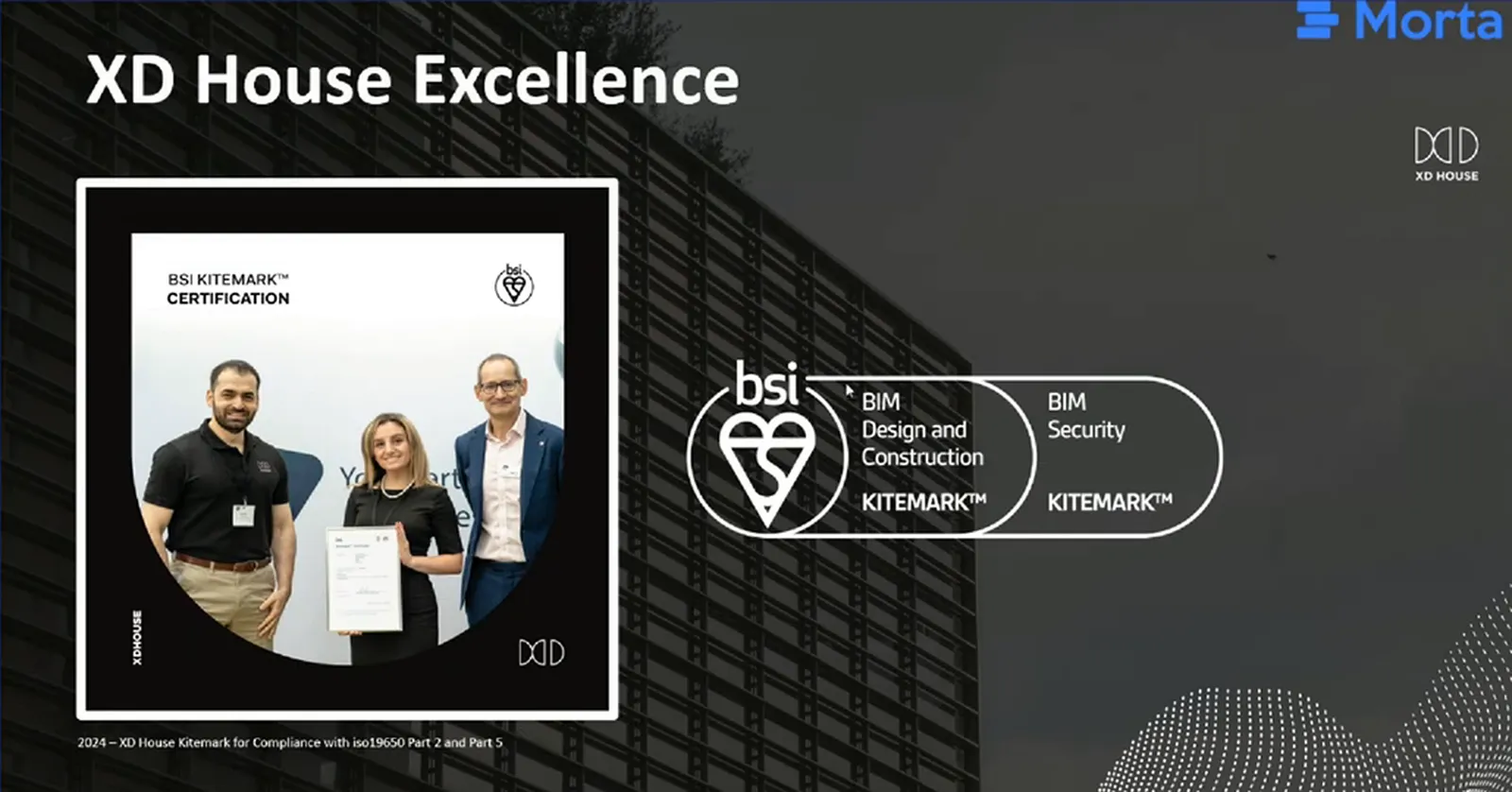
XD House took a web-based set of information management records into its ISO 19650 assessment. The assessor could inspect the company's relational arrangement rather than receive it only as separate exported documents. XD House secured its BSI Kitemark for ISO 19650 Parts 2 and 5 in 2024. The achievement reflected the company's assessed work and its use of Morta within that work.
The delivery controls made different records inspectable together. The team could see submitted models and their versions, compare planned and actual submission dates, and review RFIs by status. A Power BI report added the overall open and closed picture while retaining the individual records behind it.
A smaller change addressed repeated data entry. The team selected a person's name from the XD House team record instead of typing it again in each part of the template, avoiding another opportunity to enter the name differently.
The challenge
An appointed party produces information for a lead appointed party, but its responsibilities begin before production. During tender response, XD House needed to assess the information it had received and set out how its proposed team would manage and produce the required information.
Software knowledge did not answer the whole staffing question. XD House distinguished a person's capability to manage or produce information from their capacity to do the work. It also needed to know whether the person had the required licence, hardware and training.
Those answers could change between tender response and production. A team member could change, availability could move or training could still be needed. Once delivery began, the plan also had to remain distinct from the record of models actually submitted to the client's common data environment, or CDE.
The solution
Start with the appointment information
XD House organised the template around its appointed-party duties, from tender response to final model delivery. Pre-appointment checks established whether the lead appointed party had supplied the relevant information. Links to the tender documents in Autodesk Construction Cloud, or ACC, let the XD House team work from those project inputs when preparing its response.
The response could be exported to PDF or Word when a client needed a document outside Morta. The template supplied the structure, but the information still had to be completed for each project.
Choose people against the work
The capability and capacity assessments brought together team members, software skills and information management responsibilities. XD House recorded whether each person could manage or produce the required information, whether they had capacity and whether the necessary software licences and resources were available. The team used that evidence to identify the people selected for the project.
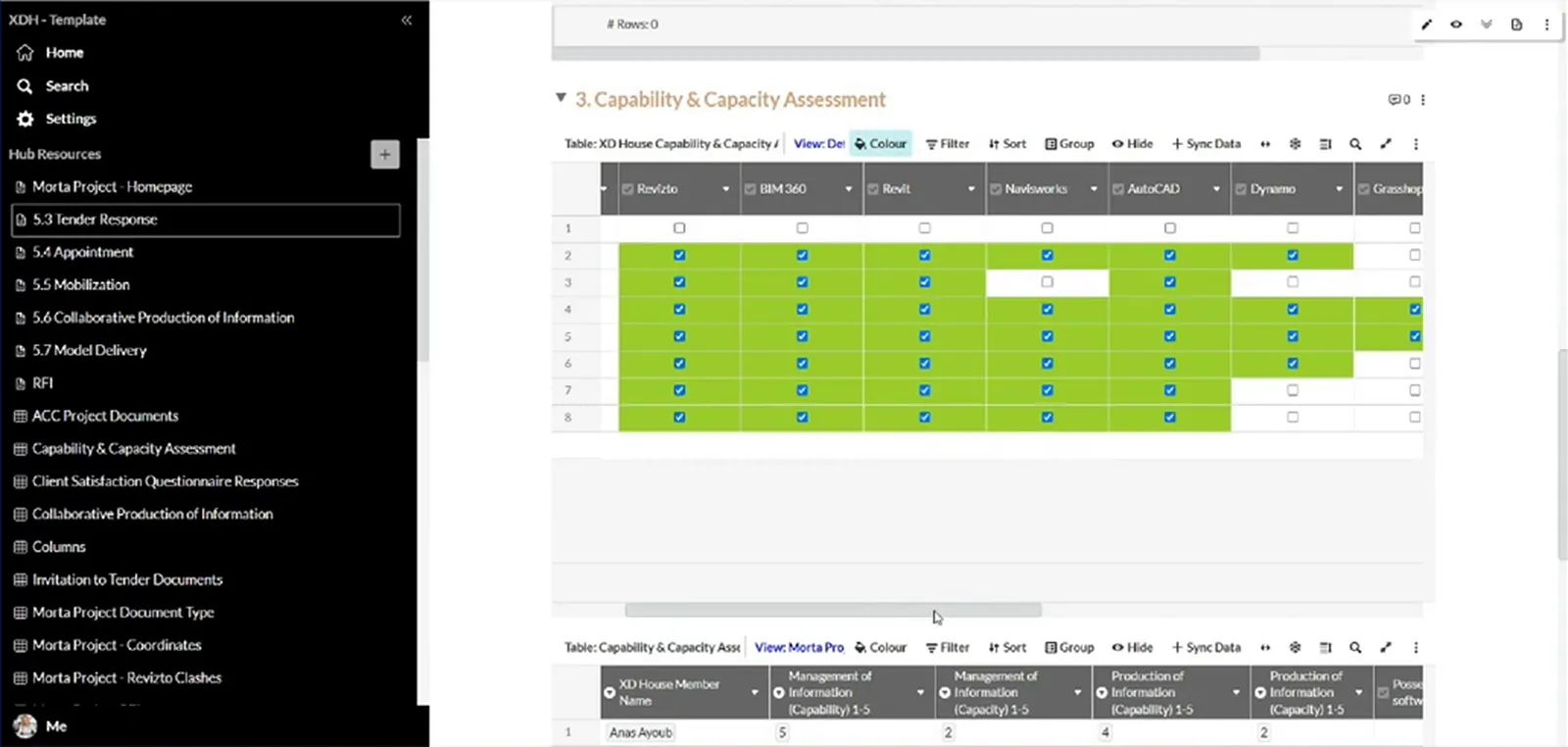
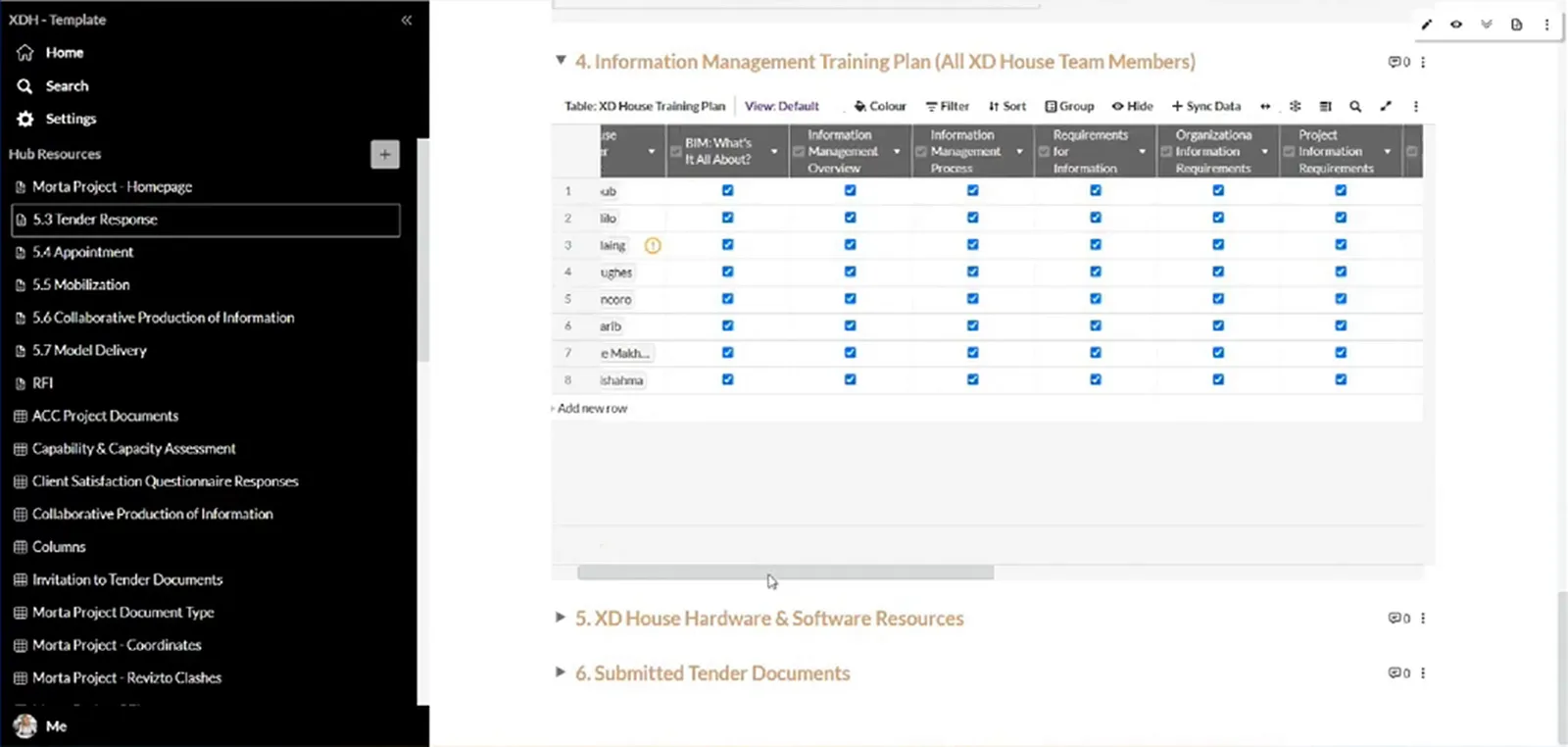
The same part of the template held an information management training plan, hardware and software resources, and links to tender documents submitted through SharePoint. The learning record used Operam chapters to show progress through ISO 19650 topics, so an identified training need could form part of the team's readiness review.
Keep production evidence connected
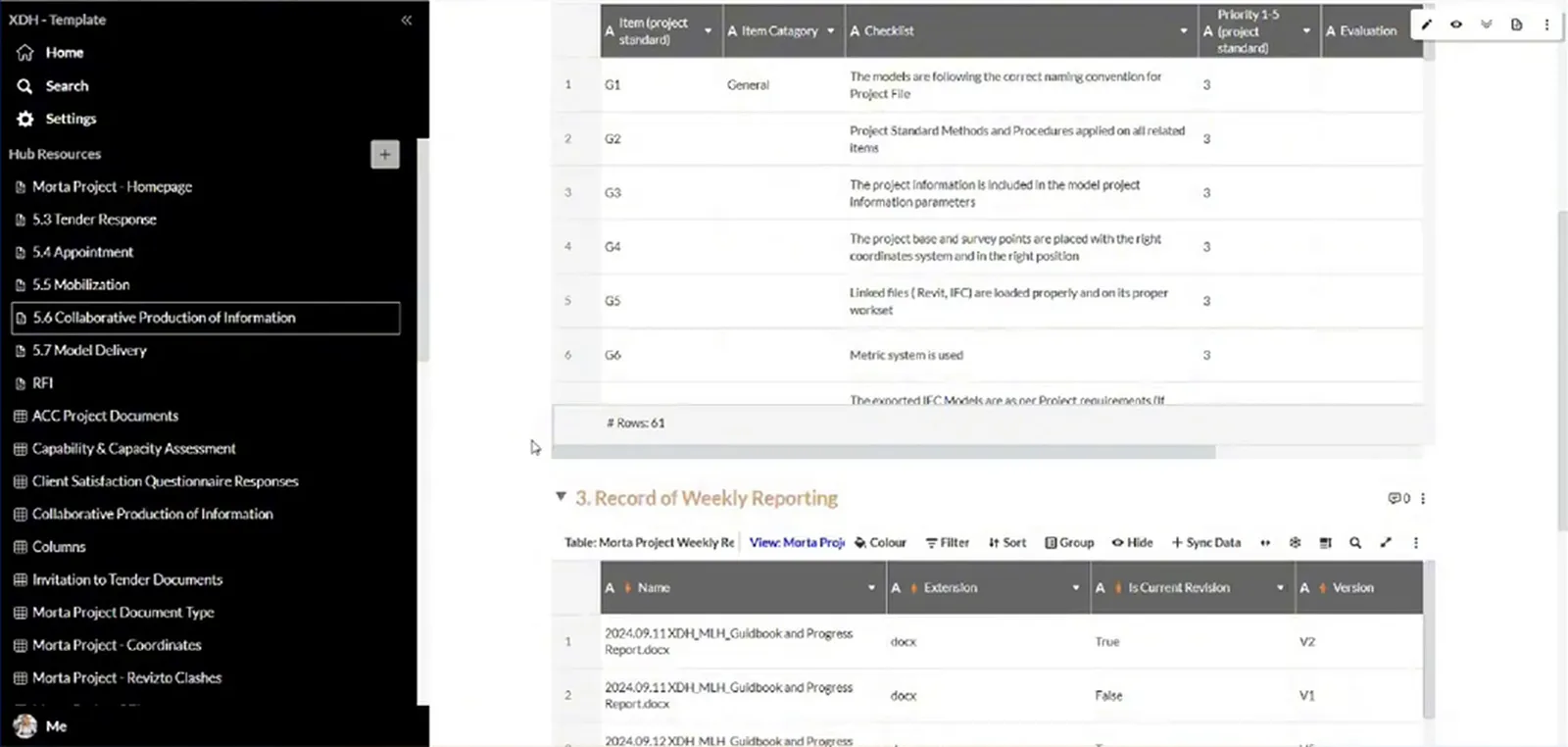
During collaborative production, XD House brought model quality checks, weekly reports, information delivery records and Revizto clash data into its Morta document. ACC records showed reports and information sent to the client. The information manager could inspect that overview, open the linked supporting report and keep feedback or comments with the work.
Compare the plan with actual submissions
Veronique's ACC Project Documents table held submitted models, versions and actual submission dates from the client's CDE. Where that connection was unavailable, she gave an alternative of importing an Excel log exported from the CDE.
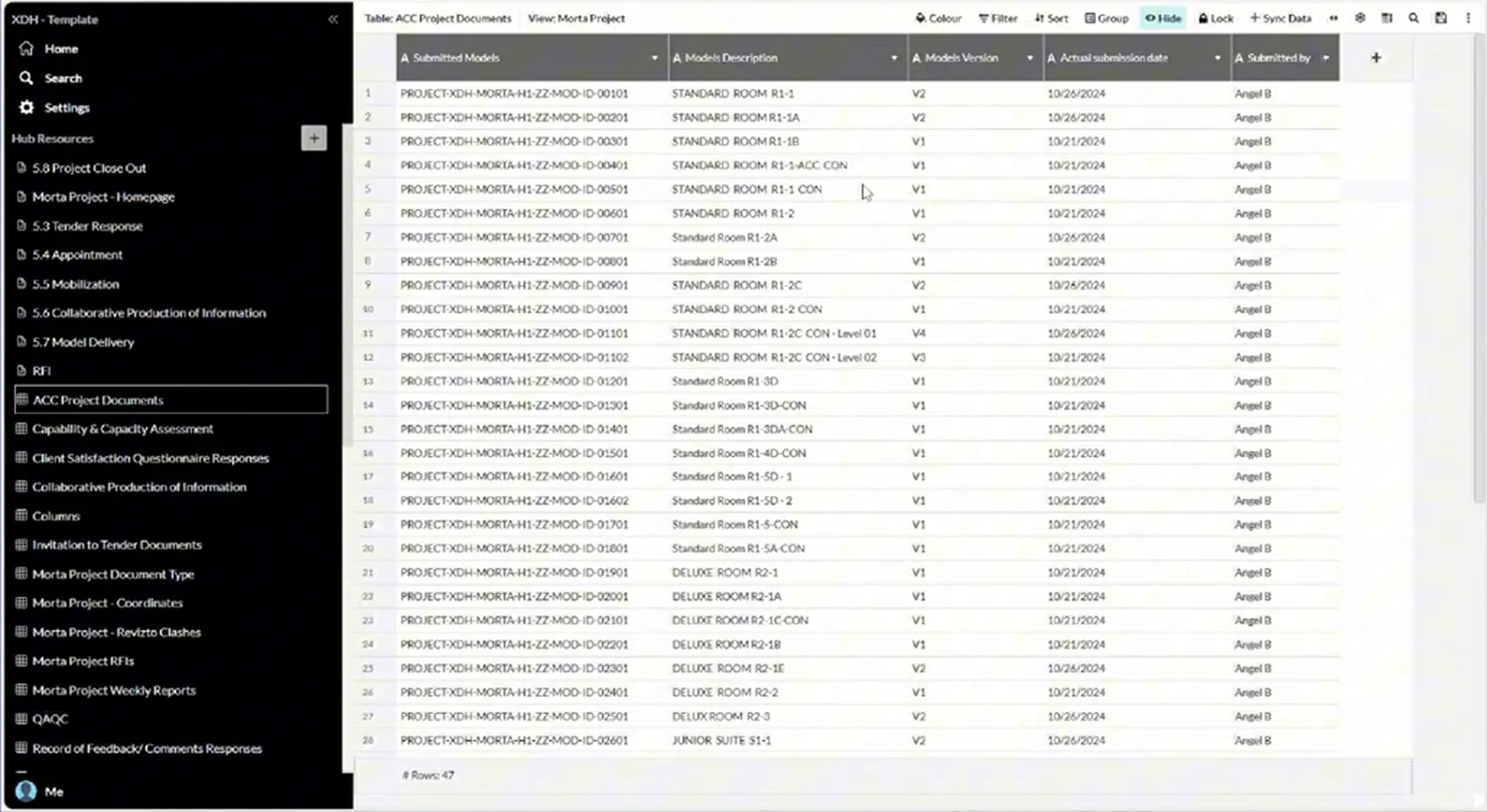
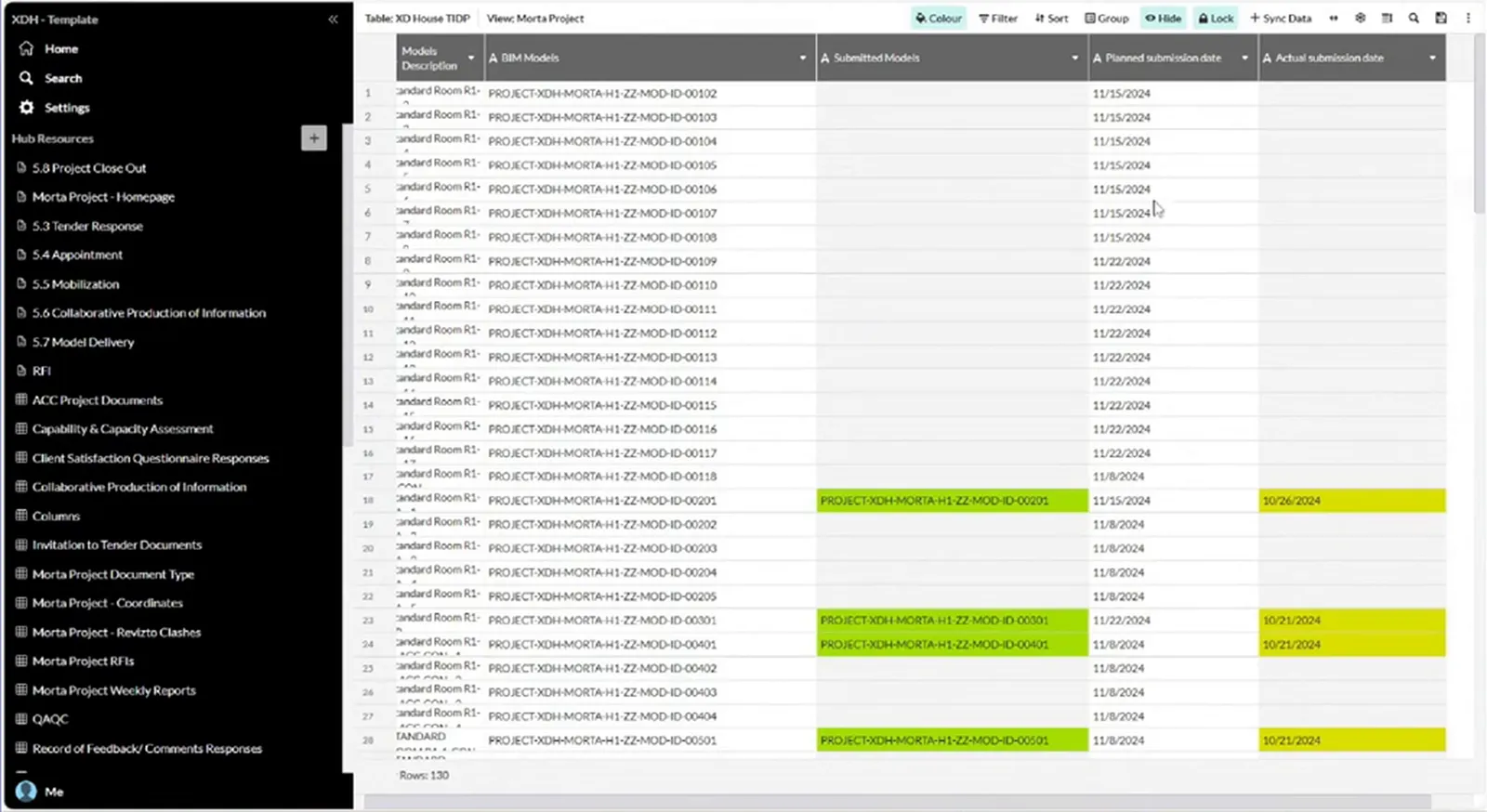
The task information delivery plan, or TIDP, retained the models XD House had committed to submit and their planned dates. A lookup matched those plan entries with ACC Project Documents. The XD House team could therefore inspect which planned models had a corresponding submission record and compare the actual date with the commitment without overwriting either field. An empty actual-date field remained a record to inspect, rather than proof by itself that a deliverable was late.
Carry each RFI into review
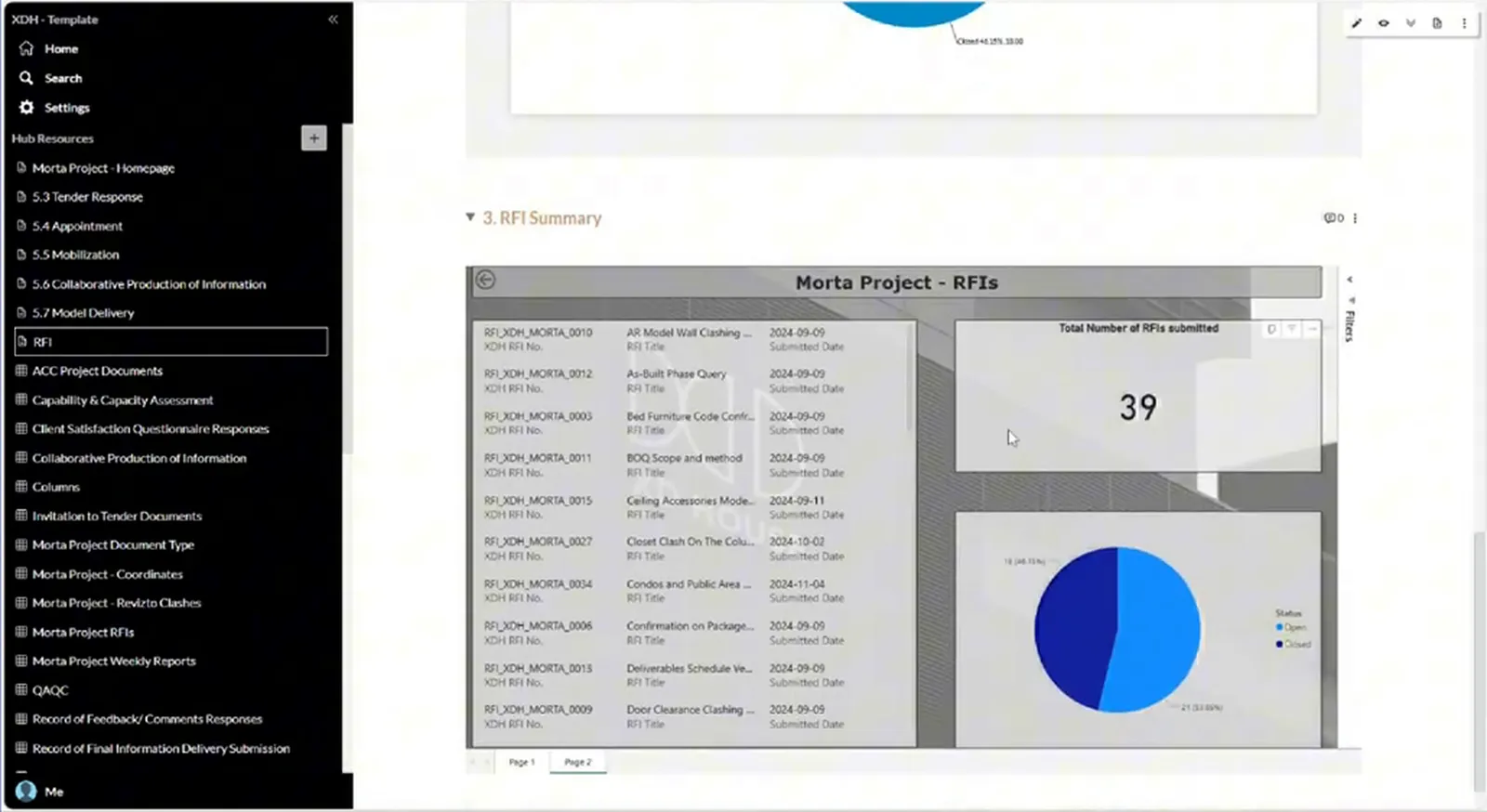
Veronique's RFI form captured the request's reference, details and status. Submission carried the record into the Review RFI table, where the XD House team could examine open items, their recorded responses and the detail needed to identify requests for follow-up.
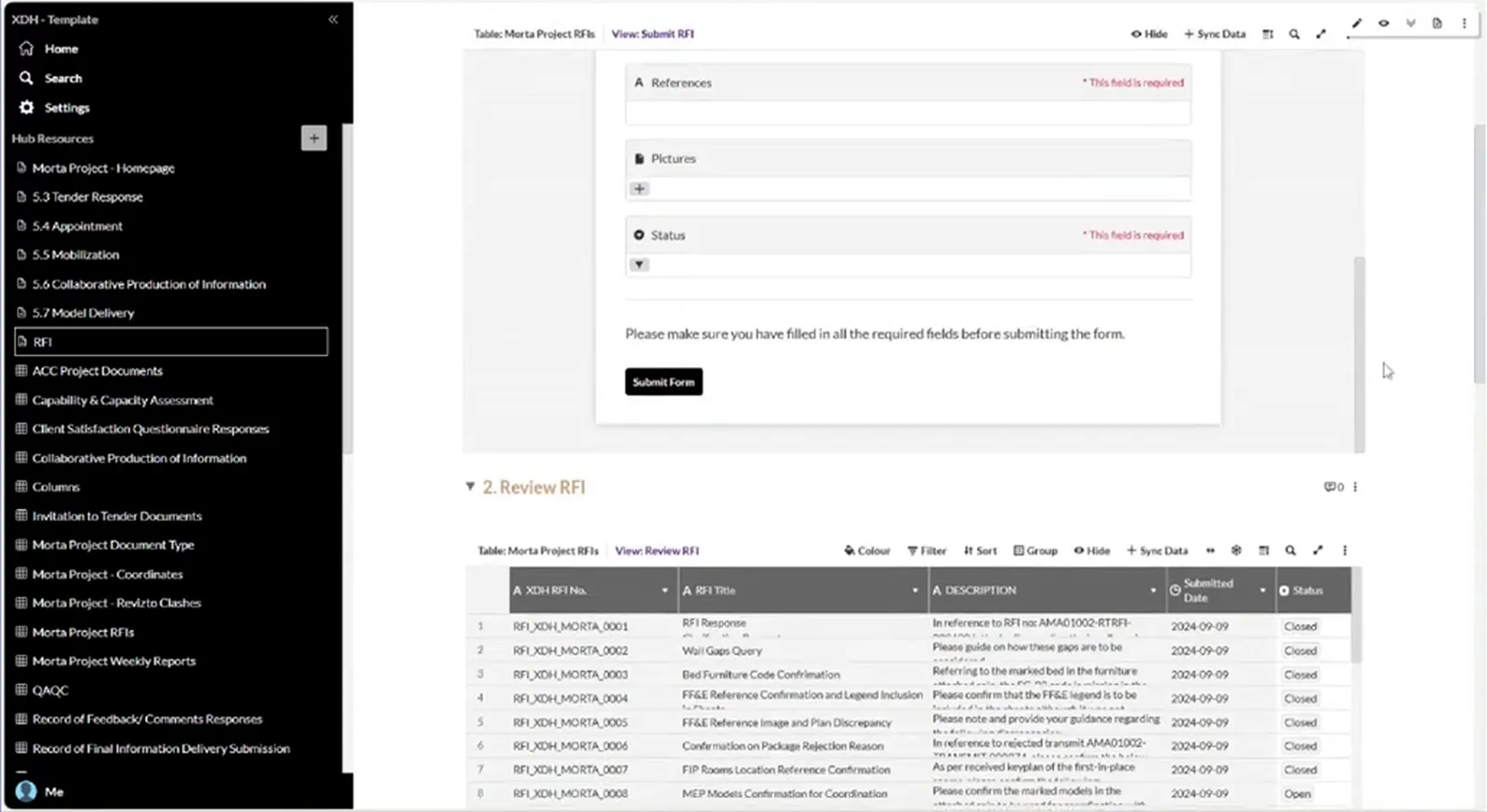
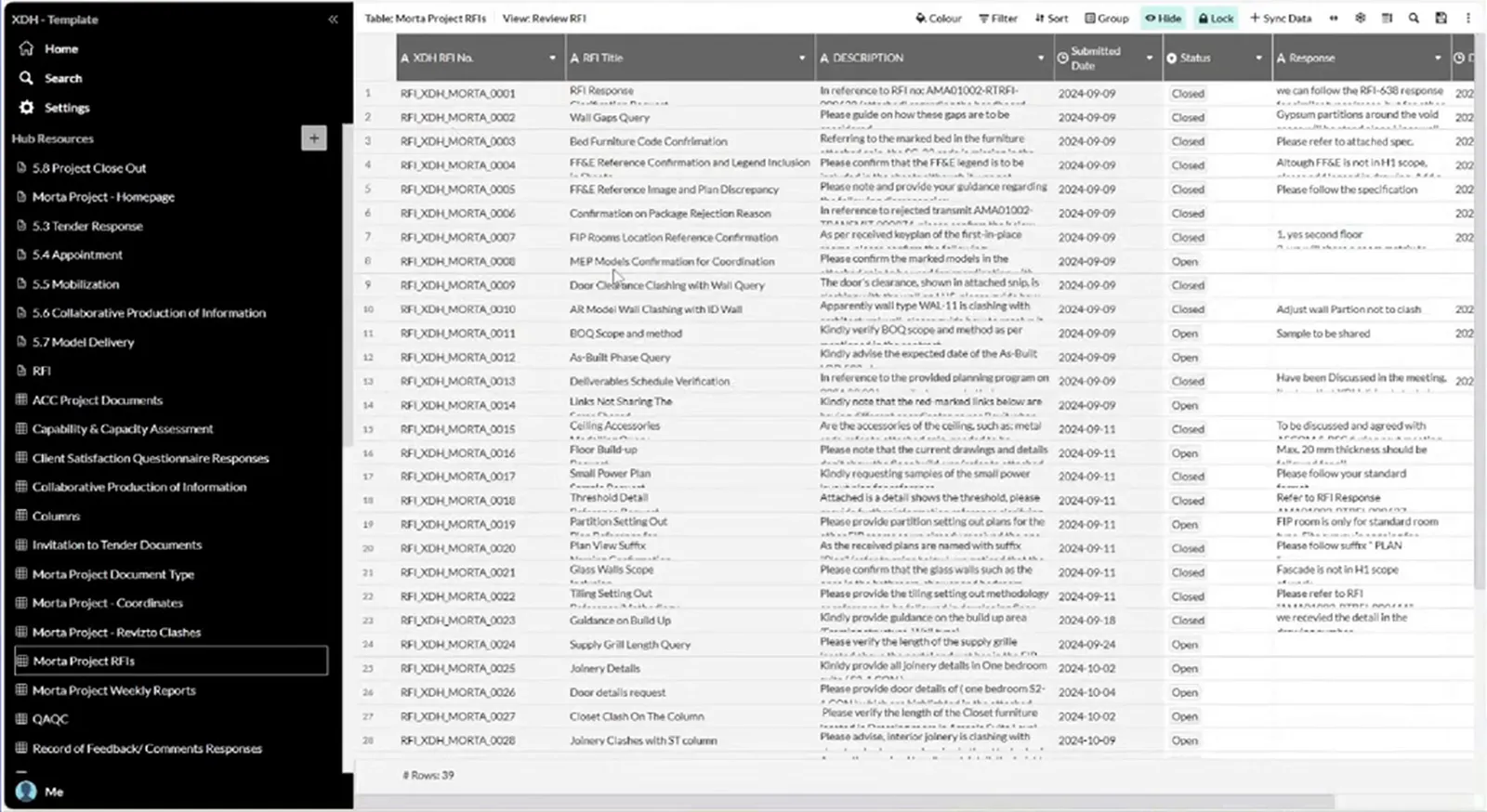
The Morta RFI table also supplied a Power BI report. The summary placed the open and closed picture beside the individual request list, so the team could move from the overall status to the records that needed attention.
The implementation
Check readiness again at mobilisation
At appointment, XD House could provide its TIDP template when the lead appointed party did not have one. Before production, the team paused to test whether the assumptions behind its tender selection still held. It revisited the selected people, their availability, training needs and both organisations' duties. This second check let XD House adjust its internal plan and notify the lead appointed party when relevant team information had changed.
Record delivery and learning
The production stage connected sent-document records with their underlying reports, model checks and clash information. At final submission, XD House retained the ACC delivery record and prepared a short lessons-learned report that could be exported to PDF or Word for the client. This completed the template's delivery history with the final-submission record and an exportable account of lessons learned for the client.
Before and after
| Check | Repeated text entry | Related team record |
|---|---|---|
| Entering a project team member's name | Type the name again, creating another opportunity for a different spelling. | Select the person already held in the XD House team record. |
About XD House
At the time of the 2024 showcase, XD House was a digital construction firm with offices in Dubai and London. Its work included BIM project delivery, information management, workflow automation and Revit plugins. Megan Hughes led the explanation of the appointed-party template and team assessments. Veronique Makhlouf covered model delivery and RFI review.
Reusing the template
XD House designed the template for use on individual projects and offered it to clients. Reusing that structure still meant checking the client's tender information, selecting a suitable team and maintaining the links between plans, submissions and review records.

