Smart Prison Estate at the Ministry of Justice
The Ministry of Justice connected delivery information, shared requirements and technical standards for different prison categories. Digitising derogation information at receipt supported internal review while suppliers changed incrementally, with further connections still planned.
Ministry of Justice · 22 November 2023
Smart Prison Estate: connecting information and technical standards
Presented on 22 November 2023 by Matthew Scard, Digital Lead, Jeannine Gavaghan, Senior BIM Manager, and Patrick Kennedy, then Technical Change Manager, in MoJ Property Directorate Technical Services. Alessandro Napoli contributed as an Associate Director at Mace Consult, the delivery partner.
The Ministry of Justice was trying to make technical standards useful across different prison categories while connecting information held in established systems. Its teams used databases for specific jobs: compare expected deliverables with delivery information, maintain shared requirements, prepare changes for governance and improve internal derogation handling.
Executive summary
The Ministry of Justice’s November 2023 presentation covered two linked workstreams. The information management team connected existing systems and used responsibilities, delivery information, indicators and audit trails to support programme checks. The technical standards team held shared requirements once, tagged them by prison category and published searchable and offline formats for designers, contractors and site teams. It also tracked proposed changes line by line for governance review. For derogations, digitising information when MoJ received it let the standards team log, assign and review requests internally while suppliers changed incrementally. The content transfer and tagging took around 12–13 months. Further connections and wider use remained planned work.
- 16,941 database lines held the technical standards in November 2023.
- 112,760 separate-document rows were Patrick Kennedy’s estimate of what category-specific Word and PDF sets would have required.
- Around 12–13 months were spent transferring the standards line by line and tagging their applicability.

The results
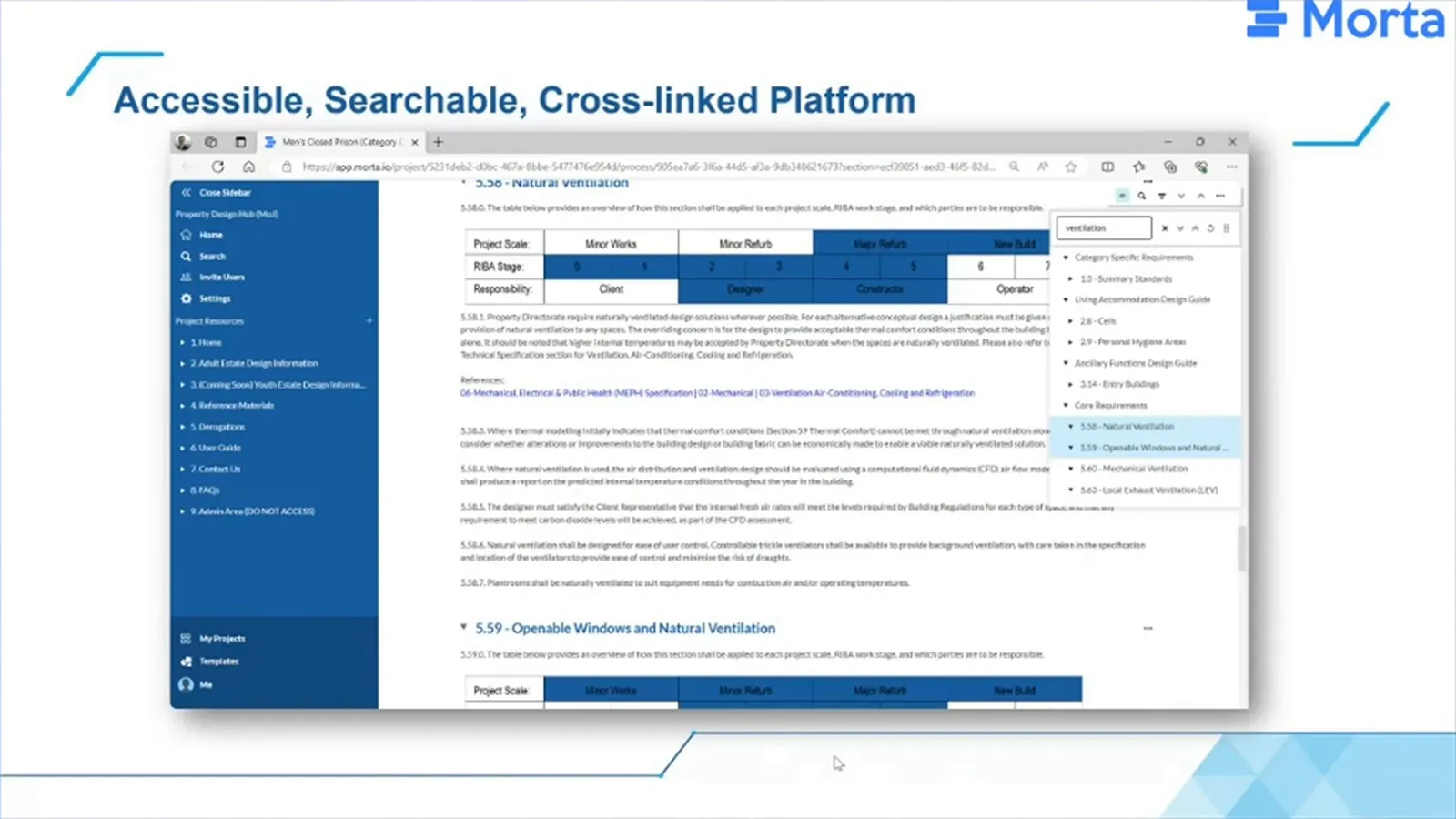
One maintained requirement could serve several prison categories. Authors applied category tags to each line, while designers and contractors searched or filtered the reader-facing standards for the establishment they were working on. This avoided maintaining the same shared clause in every separate category document.
The information management workstream also connected responsibilities with delivery reporting. A responsibility matrix defined expected deliverables and owners. The programme team could compare those expectations with actual delivery information, review indicators and retain an audit trail of checks. The team planned to apply the approach at later stages of the project life cycle as its programmes progressed.
The standards team prepared proposed amendments more directly for governance and changed its own handling of derogations. The changes reduced the standards team's preparation and handling work. Amendments still required approval from the governance board, while suppliers could continue using their existing process to submit derogation requests.
The challenge
MoJ Property brought together internal teams, operational staff and suppliers using different tools and information sources. Jeannine’s information management work had to deal with growing data volumes, legacy systems, duplication and potentially outdated information. Replacing every established system was not the aim.
The technical standards had grown around closed Category B men’s prisons. That made the documents harder to use for other establishment types. Producing a separate set for every category would also repeat requirements that those categories shared and create more copies for authors to maintain.
The operating environment set another constraint. Internet access could be restricted at prison sites, while suppliers were working across many programmes. The standards had to remain accessible on site, and an internal process change could not depend on every supplier changing at the same moment.
The solution
Set criteria around the information and its users
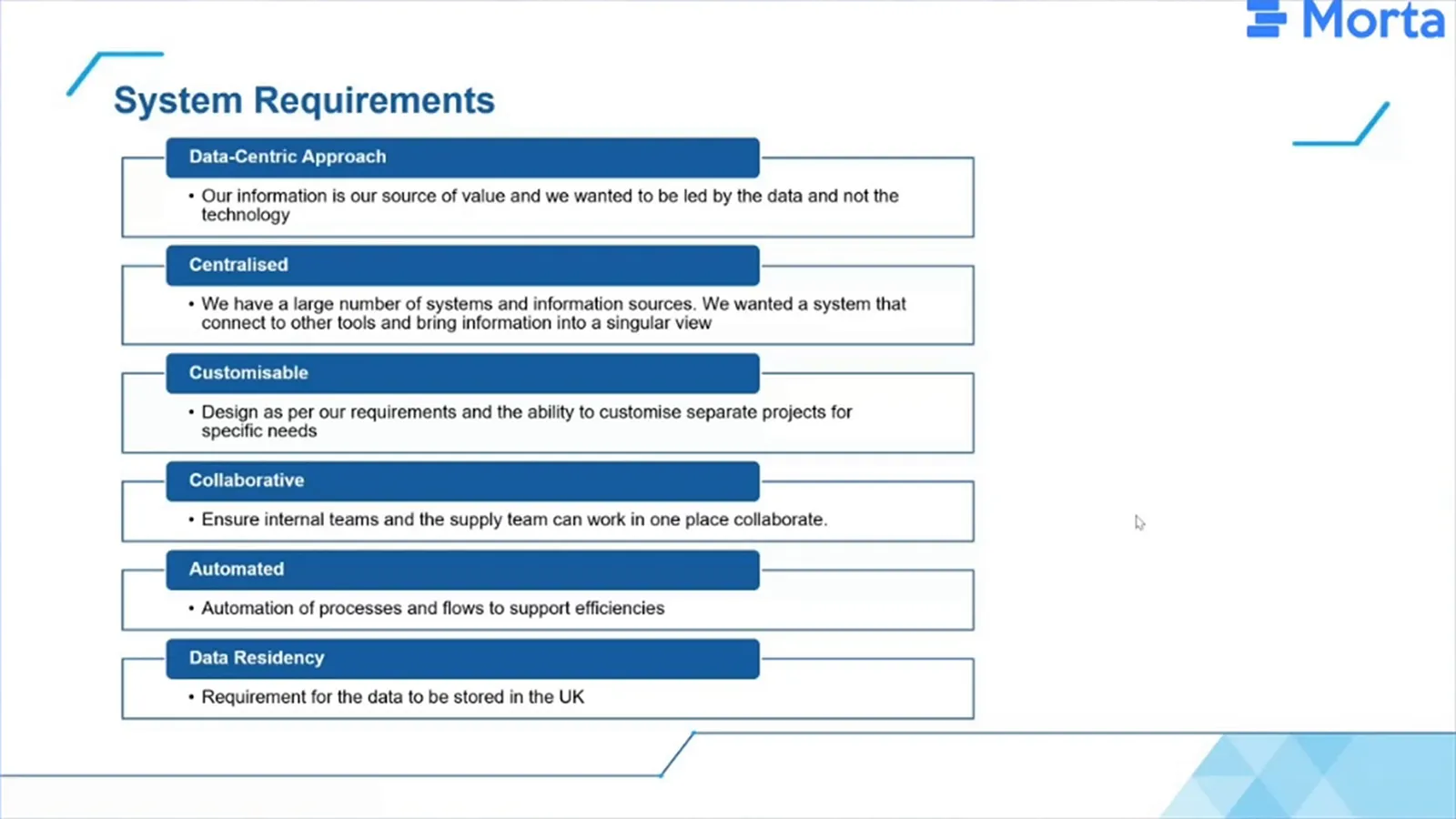
Matthew’s team wanted a data-led system that could connect with existing tools and support different project needs. It also needed collaboration across internal teams and the supply chain. Automation and UK data residency were among the team’s system requirements in November 2023.
Connect existing information
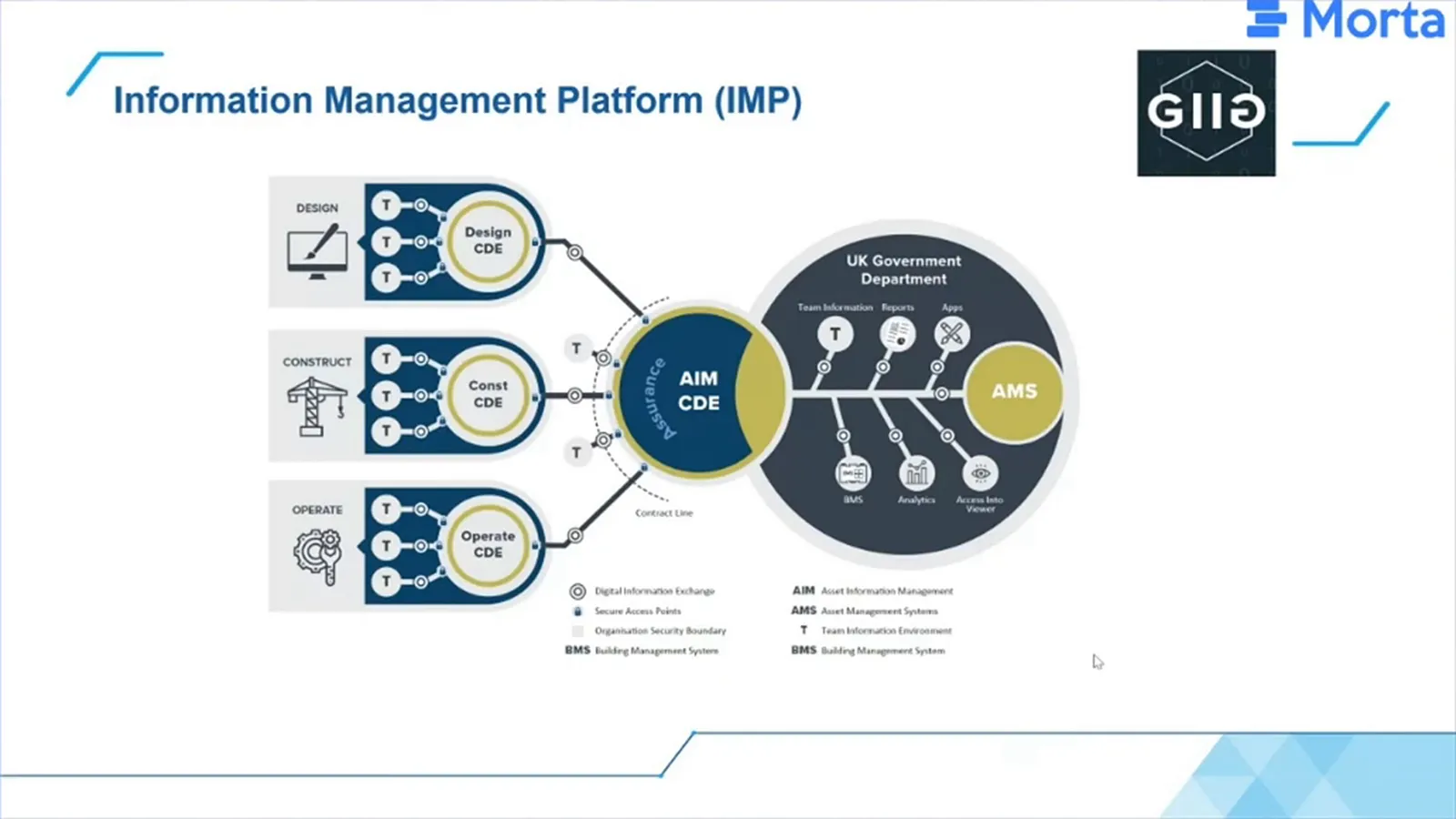
Jeannine placed Morta in front of the department’s existing information environment. Design, construction and operational information could be brought together while Viewpoint and other departmental systems kept their roles. This gave users one place from which to work with connected information without presenting the database as a replacement for every system.
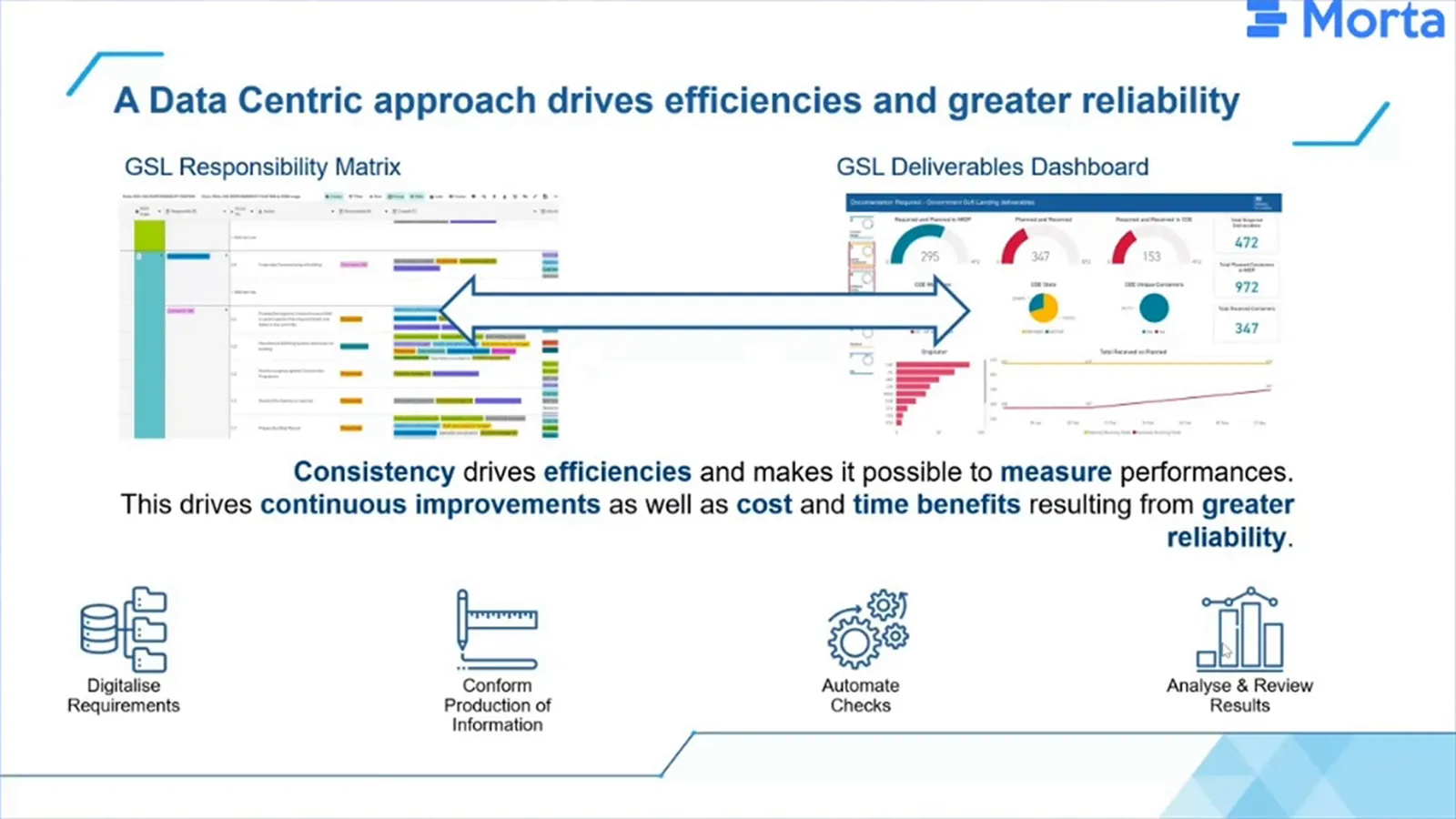
Alessandro connected the information requirements to delivery reporting. The responsibility matrix identified what each team was expected to supply and who owned it. The dashboard presented delivery information for the programme team to compare with those expectations, monitor progress and review checks.
Maintain one requirement for several categories
Patrick’s team transferred the standards into the database line by line and tagged each requirement with the prison categories where it applied. Authors could maintain a shared requirement once. Designers and contractors could then retrieve the relevant category view without working through a duplicate document set.
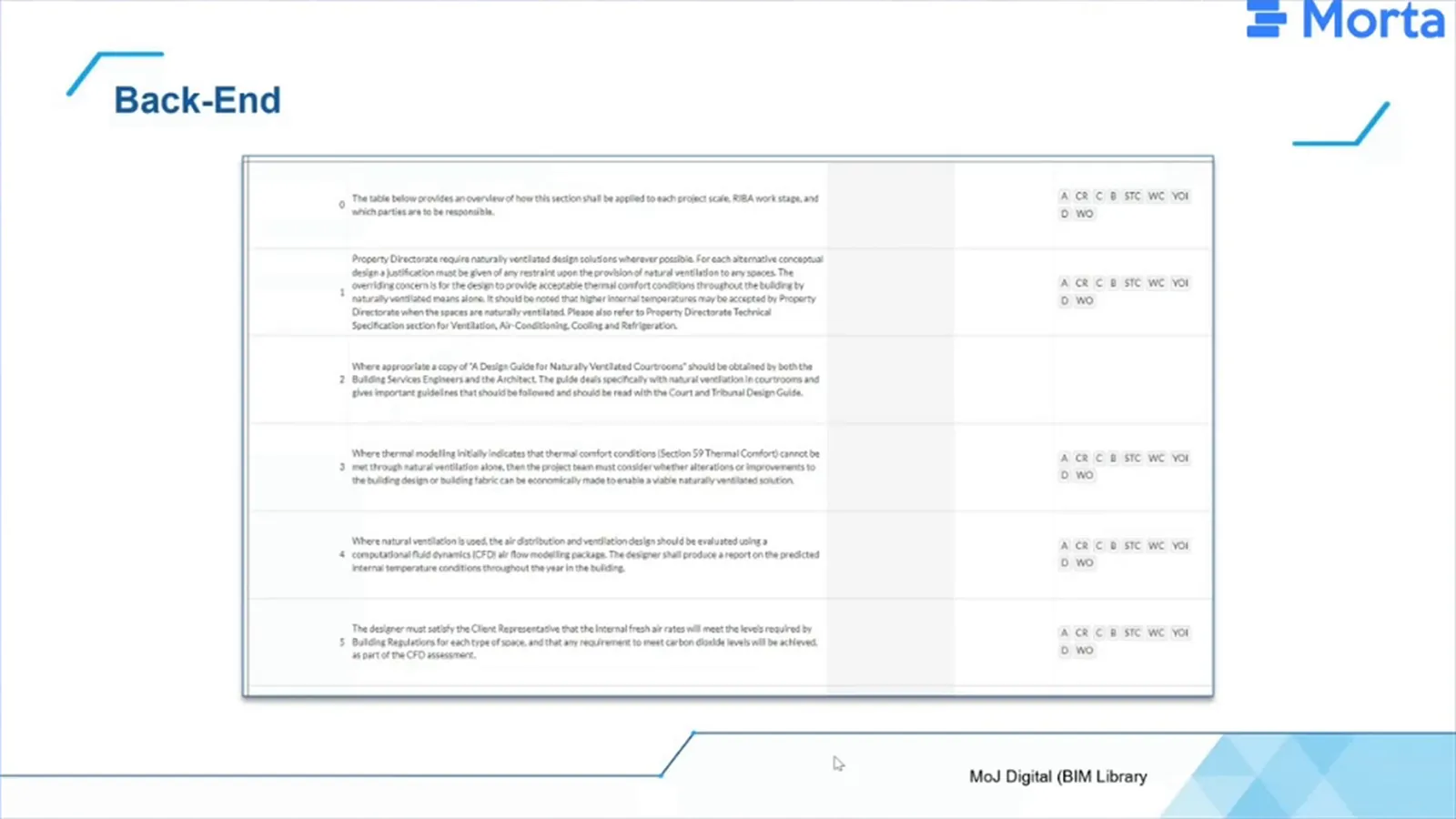
The authoring table and reader interface performed different jobs. Authors maintained structured content and applicability tags. Readers searched the standards and followed cross-links. Keeping those links within the maintained structure addressed the upkeep problem Patrick had found across many Word documents.
Keep the standards usable on site
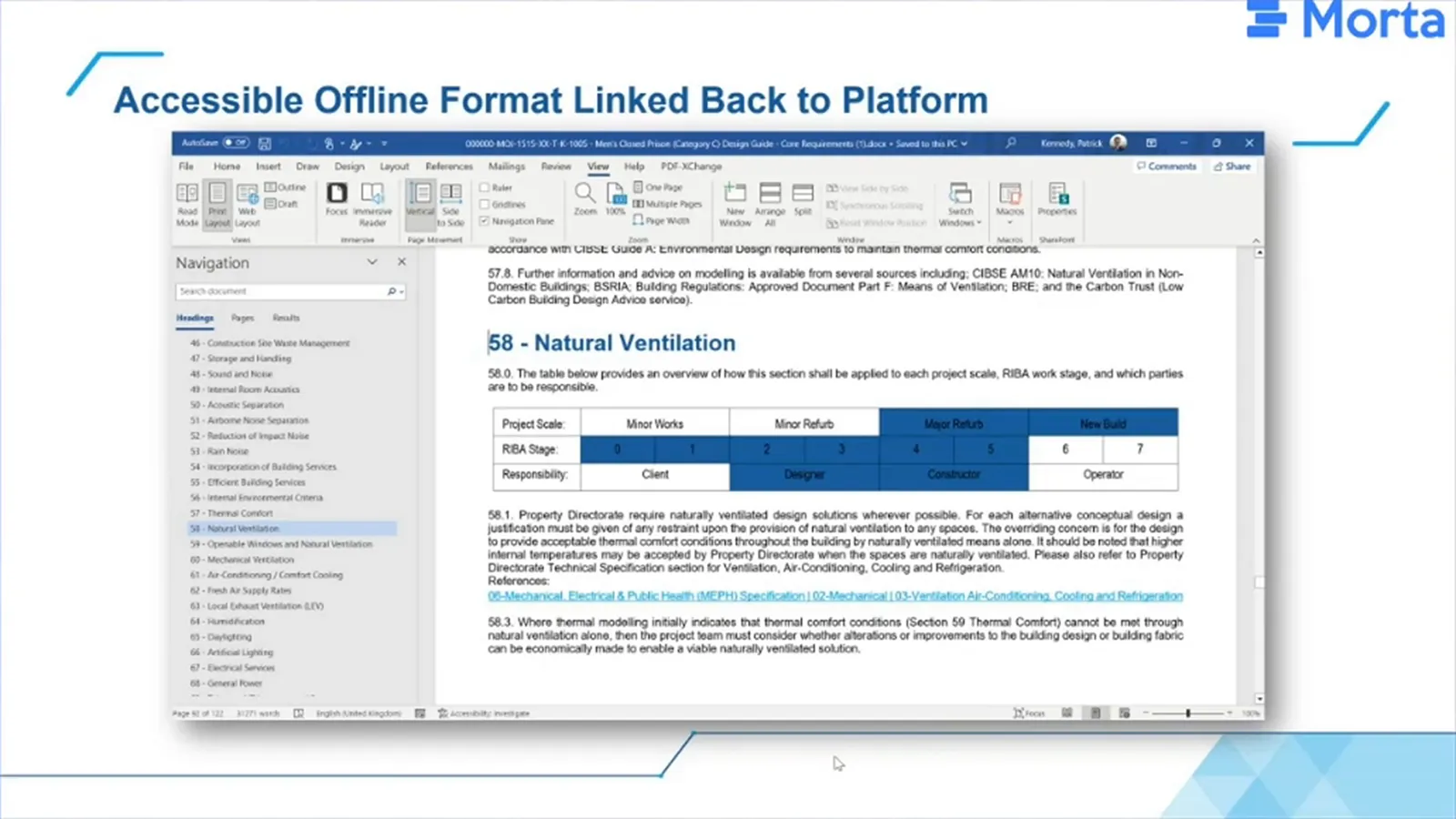
The database could also produce Word and PDF versions. Project managers, sponsors and contractors could use those outputs in restricted environments where online access was limited. The familiar formats also gave people a workable route into the new standards while the database remained the authoring source.
Prepare changes for governance review
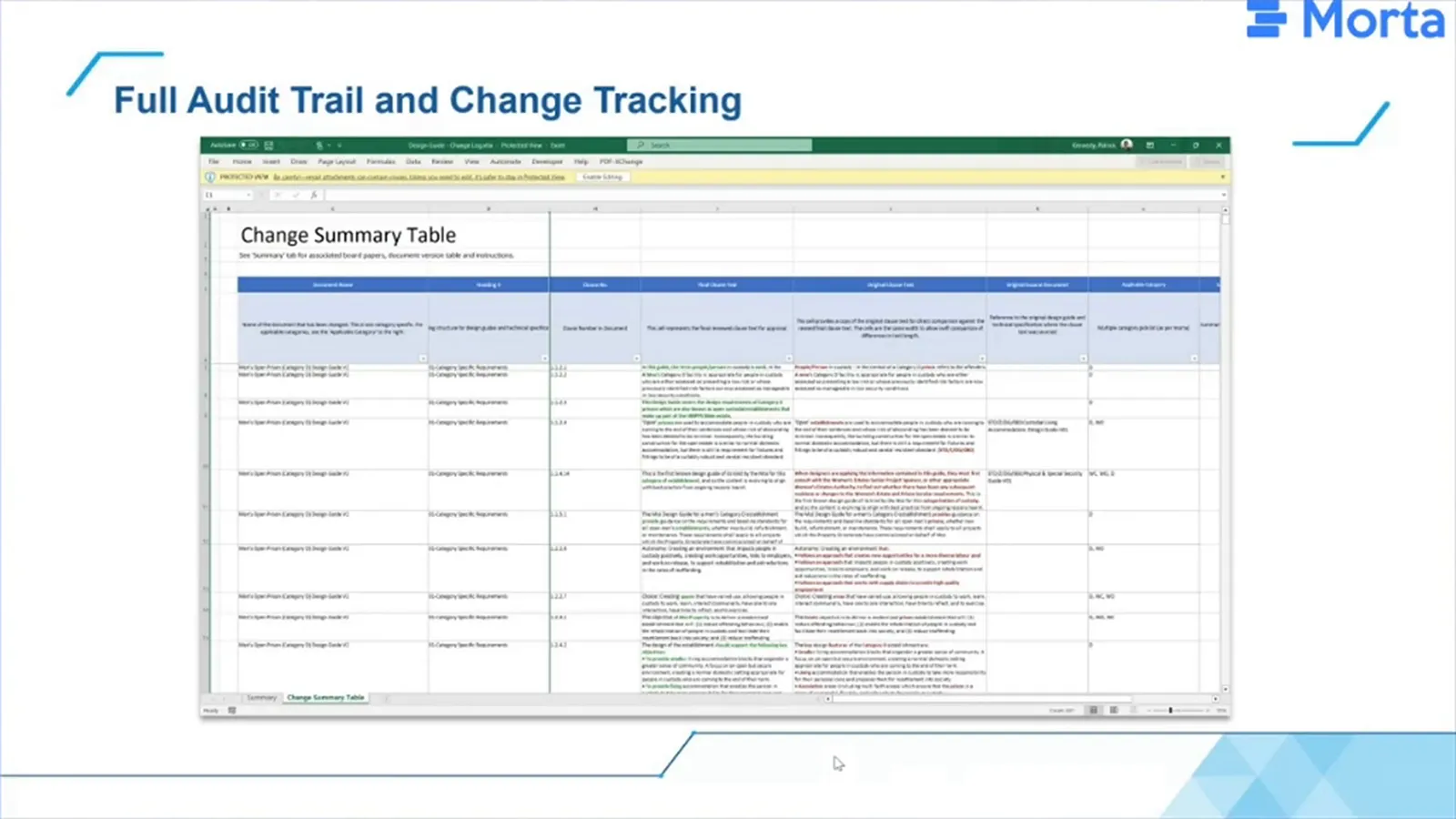
Every amendment to a standard still required approval. The standards team tracked changes line by line and exported the record to Excel. It could submit that record to the governance board for review and retain the audit information for its own use.
Let internal and supplier processes change at different speeds
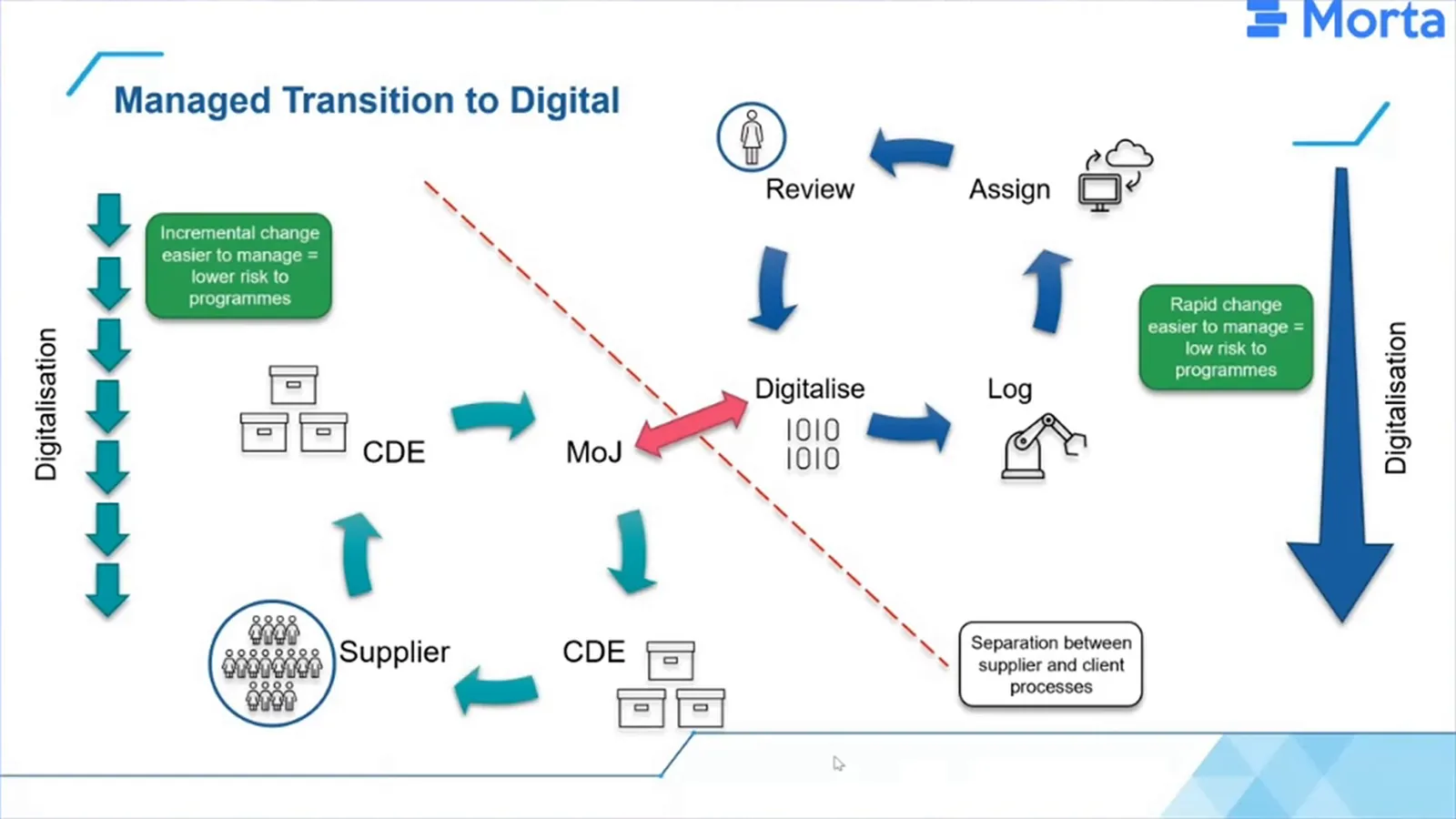
A derogation is a request to depart from a technical standard. The standards team had to receive each request, log it, assign it to the right person and review the proposed alternative. Supplier handling and the Ministry’s internal work were originally tied together, making rapid change across all parties risky.
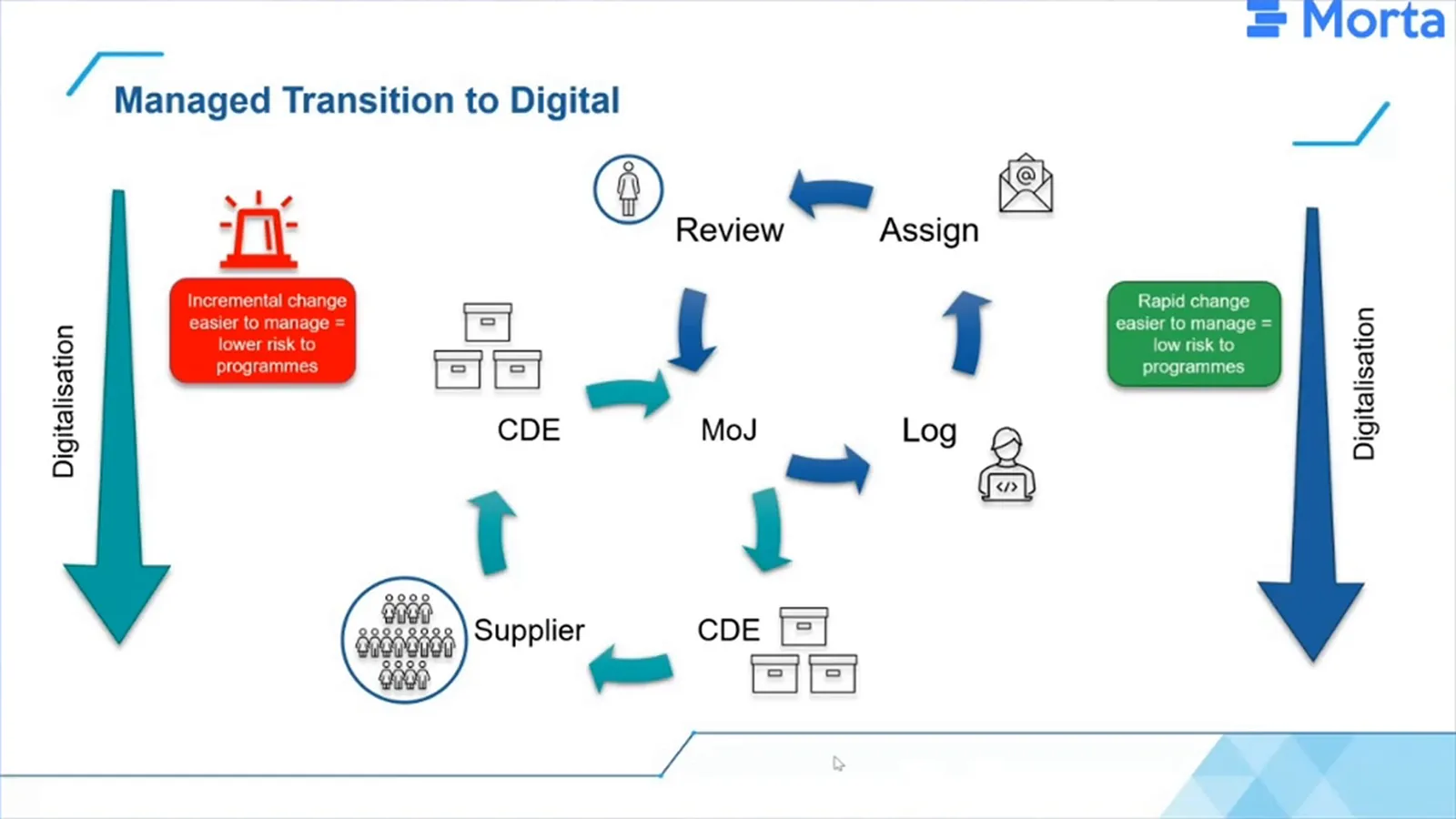
The team digitised the request information when MoJ received it. Staff could then log, assign and review requests in their internal digital process while suppliers kept their existing side of the process. The receiving boundary let the team improve its own handling while suppliers adopted change incrementally.
Use the requirements to check design information
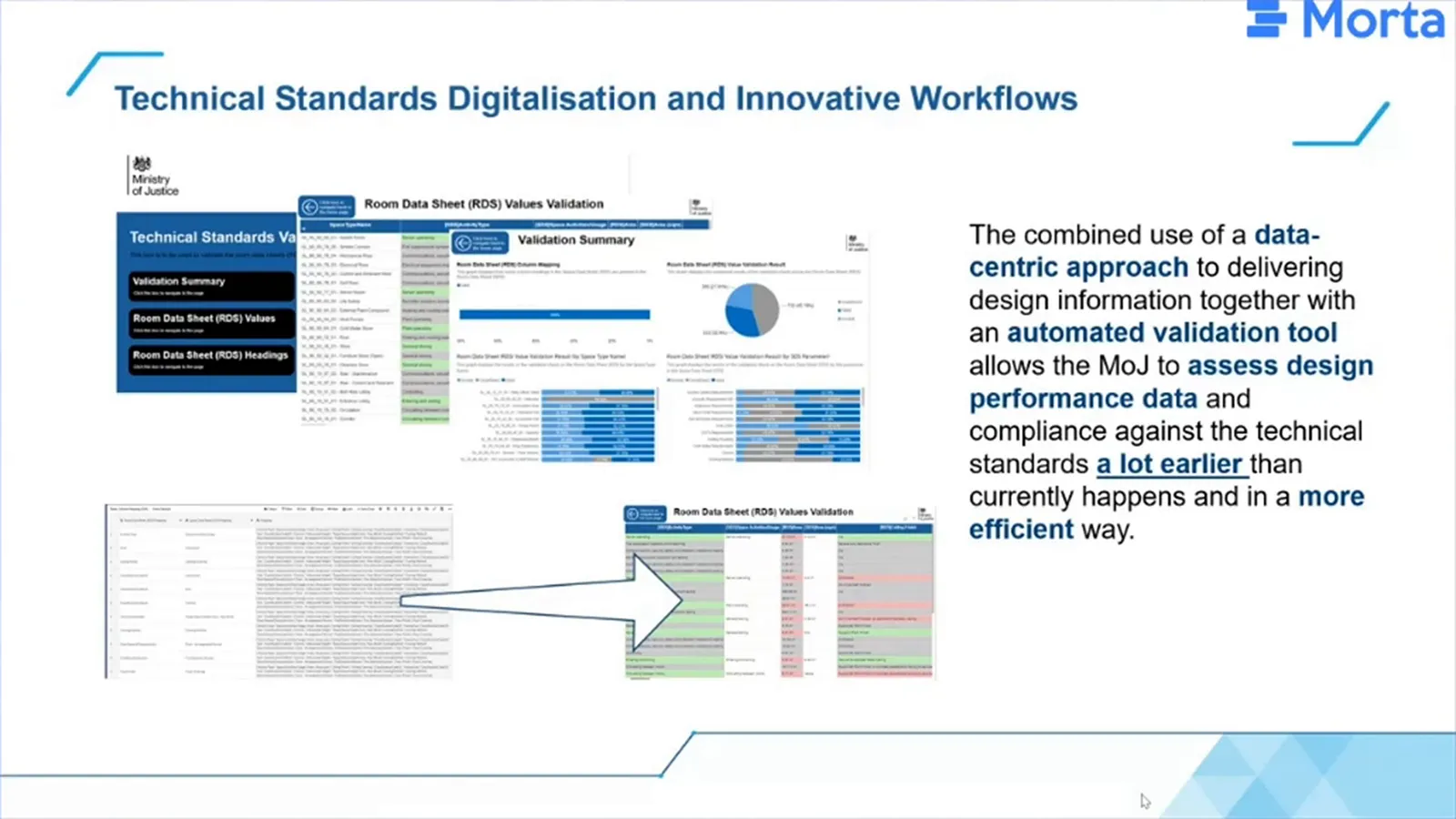
Alessandro’s room data sheet example combined digitised performance requirements with an automated validation tool. MoJ could review detailed results and a summary of checks against the technical standards earlier in the design process than with manual checking.
The implementation
The standards conversion took around 12–13 months. Patrick’s team worked through the content line by line, rationalised its structure and added the category tags. Establishing how the standards would be maintained was part of the work alongside the database transfer.
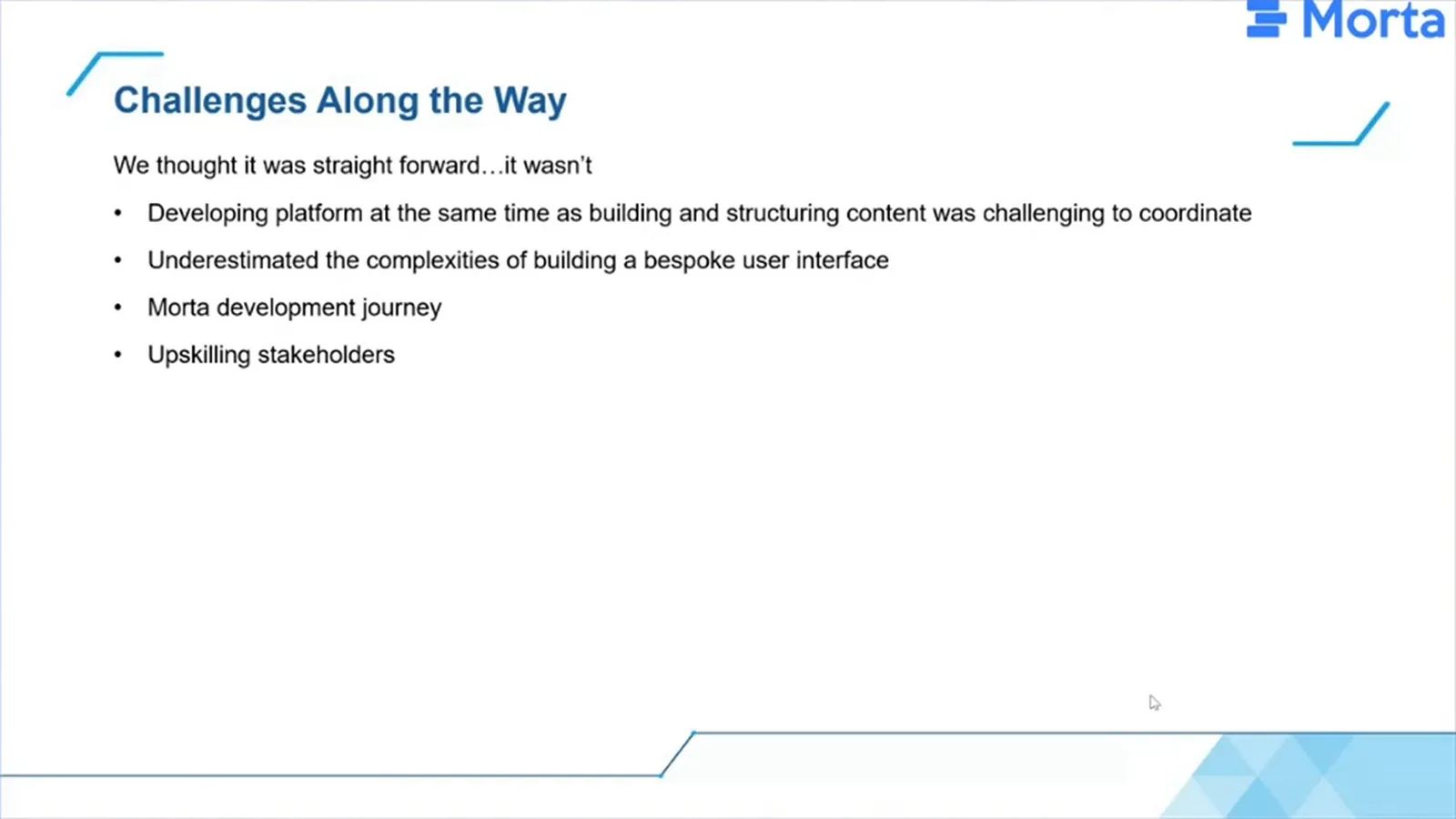
The platform and its content were developed together. Alessandro identified the coordination this required, the underestimated complexity of a bespoke interface and the need to build stakeholder skills while Morta itself was still developing. Those constraints were part of the implementation work.
The four contributions remained distinct. Matthew set the strategy and system criteria. Jeannine developed the information management approach. Patrick led the standards and derogation work. Alessandro brought Mace Consult’s delivery-partner perspective to delivery reporting, design validation and implementation.
Before and after
| Area | Starting position | Approach presented in November 2023 |
|---|---|---|
| Category requirements | Standards centred on closed Category B men’s prisons | Shared requirements tagged for relevant prison categories |
| Author upkeep | Separate documents made common content and cross-links harder to maintain | Authors maintained structured content once and readers used searchable, cross-linked views |
| Standards changes | Preparing amendments for governance required substantial manual work | A line-level change record could be exported for board review |
| Derogation handling | Supplier and MoJ processes were closely tied | Digitising at MoJ receipt separated internal work from incremental supplier change |
| Restricted-site access | Online access could be limited | Word and PDF outputs kept requirements available offline |
| Information management | Information sat across internal, external and legacy systems | Connected information supported delivery comparison, indicators and audit trails |
About the Ministry of Justice team
This work came from MoJ Property Directorate Technical Services. Matthew Scard, Jeannine Gavaghan and Patrick Kennedy represented the Ministry. Alessandro Napoli contributed from Mace Consult as the delivery partner.
What’s next
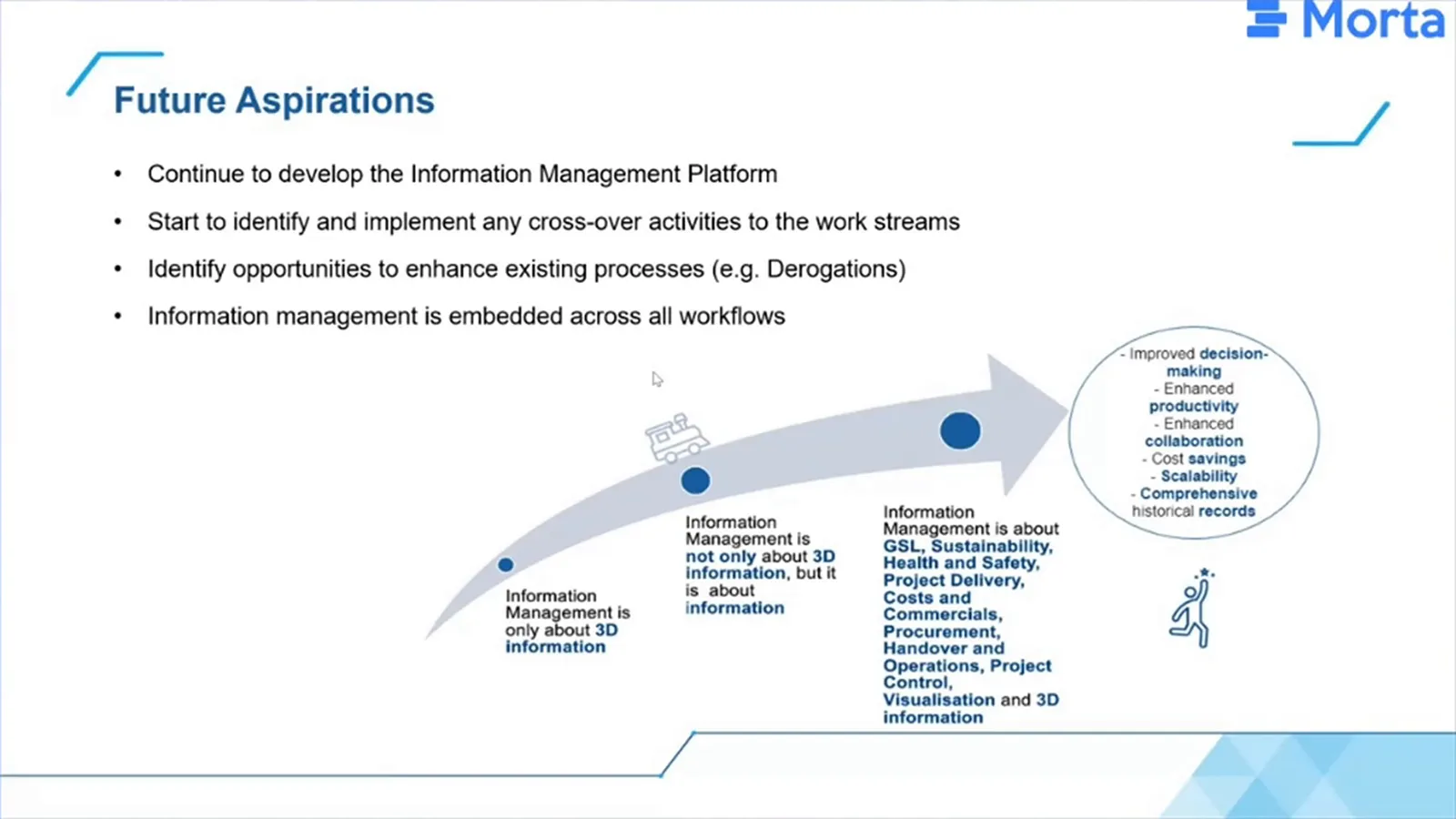
In November 2023, the team planned further connections between the information management platform and existing systems. It also intended to identify work shared between the information management and technical standards streams and apply learning from derogations to other internal processes. Object libraries were being considered, with digital twins among the possible later applications.
Further rationalisation of the standards and wider information management policy adoption also remained planned. These were plans at the time of the November 2023 presentation.