Community Story
Christian Thomas, Director & Co-founder at AJ Digital
How AJ Digital structures O&M handover around technical review
AJ Digital gave operations and maintenance packages a common, configurable structure. Combined maintenance data, staged technical review and role-specific readiness views helped teams find information and track what was needed for practical completion.
AJ Digital · 22 November 2023
On a large project, operations and maintenance (O&M) information may arrive through dozens of subcontractor packages. If each package follows its supplier's own layout, the building operator has to learn a different route to the information each time.
During a November 2023 Community Showcase, Christian Thomas opened AJ Digital's live Morta template and showed a different approach. Common sections gave every package a recognisable structure, while the project team could still configure the sections and fields around the client's requirements.

Executive summary
AJ Digital used a common, configurable O&M template to give building operators a familiar route through subcontractor packages. Structured product, task and frequency fields could feed a combined maintenance plan, with supporting files attached. The review route separated QA completeness checks from technical review by someone who knew the installation. A separate checklist identified the information needed at practical completion for the client to take ownership and operate the building. It could record an owner and completion date against outstanding items. Role-based reports showed anticipated, received and activity data. The team still had to revisit unreliable estimates of how much information subcontractors would supply.
At a glance
- Christian described around 50 O&M packages as a typical scale.
- A handover checklist typically contained roughly 250–350 items drawn from the client's requirements.
- Two standard review stages covered QA and a technical package review, with an optional client stage.
The results
A familiar structure across many packages
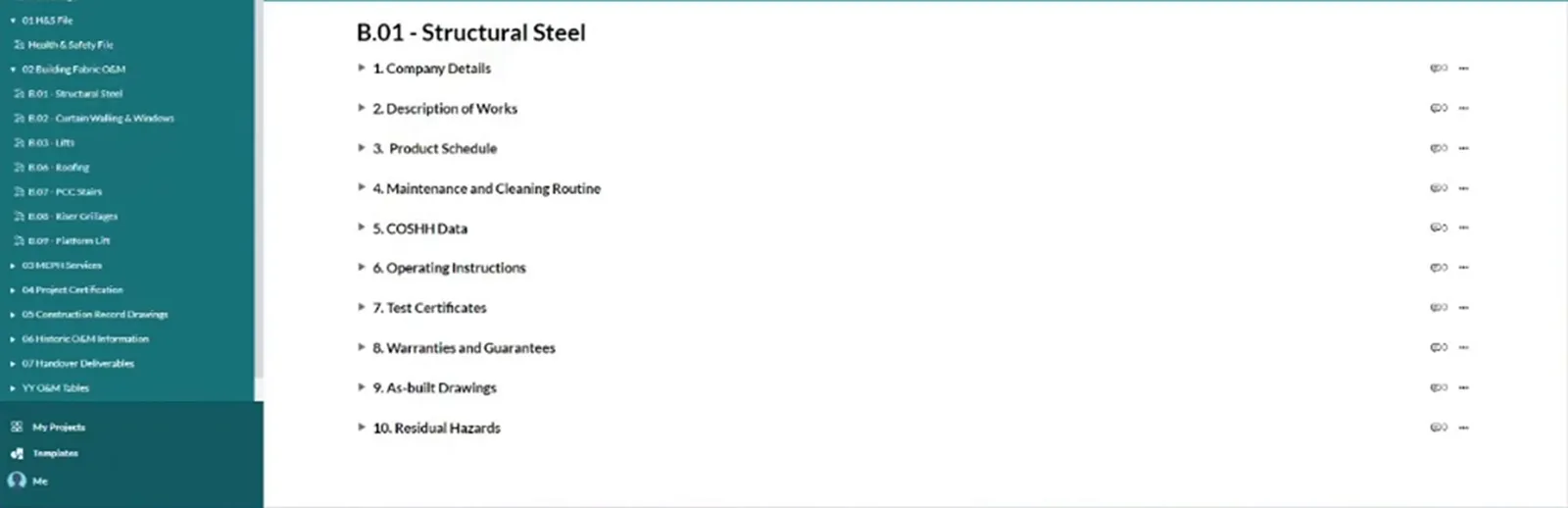
AJ Digital set up a process for each subcontractor package and applied the same configurable O&M sections across the fabric and MEP packages. Requirements still shaped the template, so the team could add, remove or consolidate sections for the project.
For the building operator, that repeatable structure created a familiar route through the handover. The same type of document could be found in the same section from one package to the next, without relearning every supplier's layout.
One view for maintenance planning
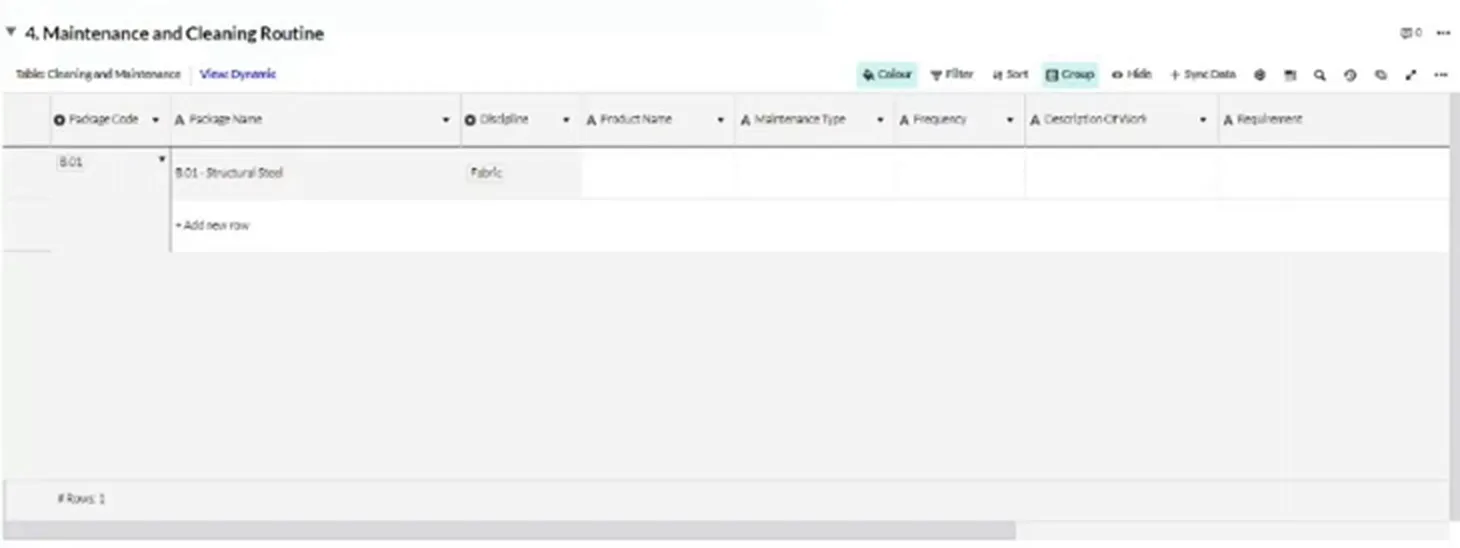
Each package could hold the product, maintenance task and frequency as structured fields, with diagrams and technical documents attached to supply the detail. The team could agree with the client where controlled values or numeric frequencies were useful and where contributors needed more freedom.
Package-tagged rows then fed one maintenance and cleaning table. Brought together, they formed a combined PPM view that the client could use to plan activity or export for further use, while the attached documents remained available for reference.
Completeness and technical knowledge in the same review route
Information could begin as an administrator's draft. QA then checked that the required fields were complete and useful, rather than filled with a generic pointer to an attachment. A named package reviewer close to the installation checked the technical content against what was actually used.
That sequence gave the reviewer a clear chance to catch wrong, unused or missing products before contractor acceptance. The client could then be added as a further reviewer and sign off an item, a section or the whole O&M at the level agreed for the project.
Essential handover information made visible
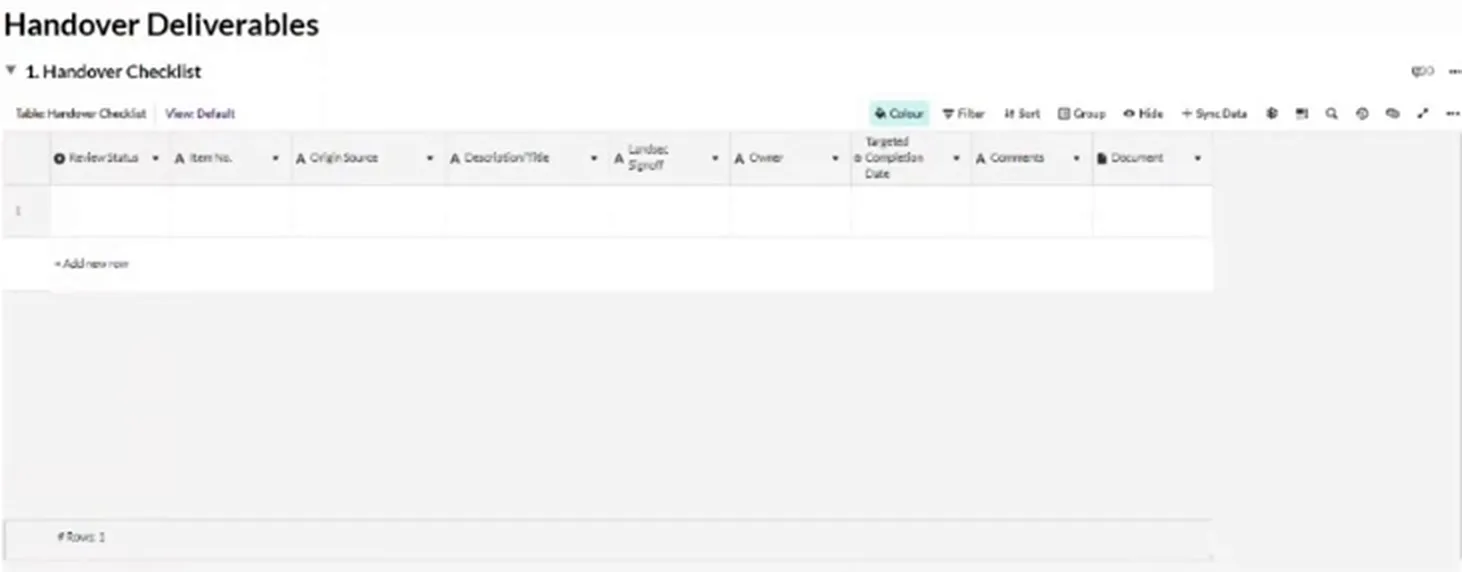
AJ Digital could turn the client's handover requirements into a checklist, often roughly 250–350 items long, then mark the items that were PC-critical. This subset focused the project team and client on the information needed to take ownership of the building and operate it at practical completion.
The checklist could show the review state, owner, outstanding item and completion date. That gave the client and project team a practical way to monitor essential information through delivery and keep the remaining commitments visible.
The challenge
Traditional O&M submissions can inherit the structure and level of detail chosen by each subcontractor. Across dozens of packages, that variation makes it harder for the people who run the building to find the right information consistently.
Some will be more detailed, some won’t, some will be good, some will be bad.
Christian Thomas
There is also a knowledge gap to manage. The person installing a product may pass its details to an office administrator who has not seen the installation. Without a technical review, the handover can carry the wrong product, a product that was never used or no record of something that was installed.
Readiness is difficult to judge from files alone. Early estimates of how many records a subcontractor will supply can change, and an entry that says only “refer to attached” does not tell the client whether the information is complete enough to use.
The solution
AJ Digital connected four parts of handover in one configurable process:
- common O&M sections that still reflect the project's requirements
- structured maintenance fields with supporting documents attached
- QA, technical package review and optional client acceptance
- PC-critical tracking and role-based reporting for handover readiness
The template kept the decisions with the project team. The client or contractor could decide how tightly to control each field, who should review each package and how detailed client acceptance needed to be.
The implementation
Configure the template before collection
AJ Digital could begin with its standard O&M structure, then review the client and project requirements. The team could add, remove or consolidate sections and decide where pick lists or numeric values would create useful consistency.
Each subcontractor kept a package-specific process. Shared tags connected those packages to common tables, preserving package responsibility while giving the project team a view across the handover.
Separate submission from acceptance
Contributors could add information in draft while technical documents moved through their approval process. When the attachment and record were ready, QA checked the required fields and the technical package reviewer checked the installation detail.
Contractor acceptance could then open incremental client access. Where the project needed it, a client stage added another recorded decision for an item, a section or the whole O&M.
Give each role a useful view
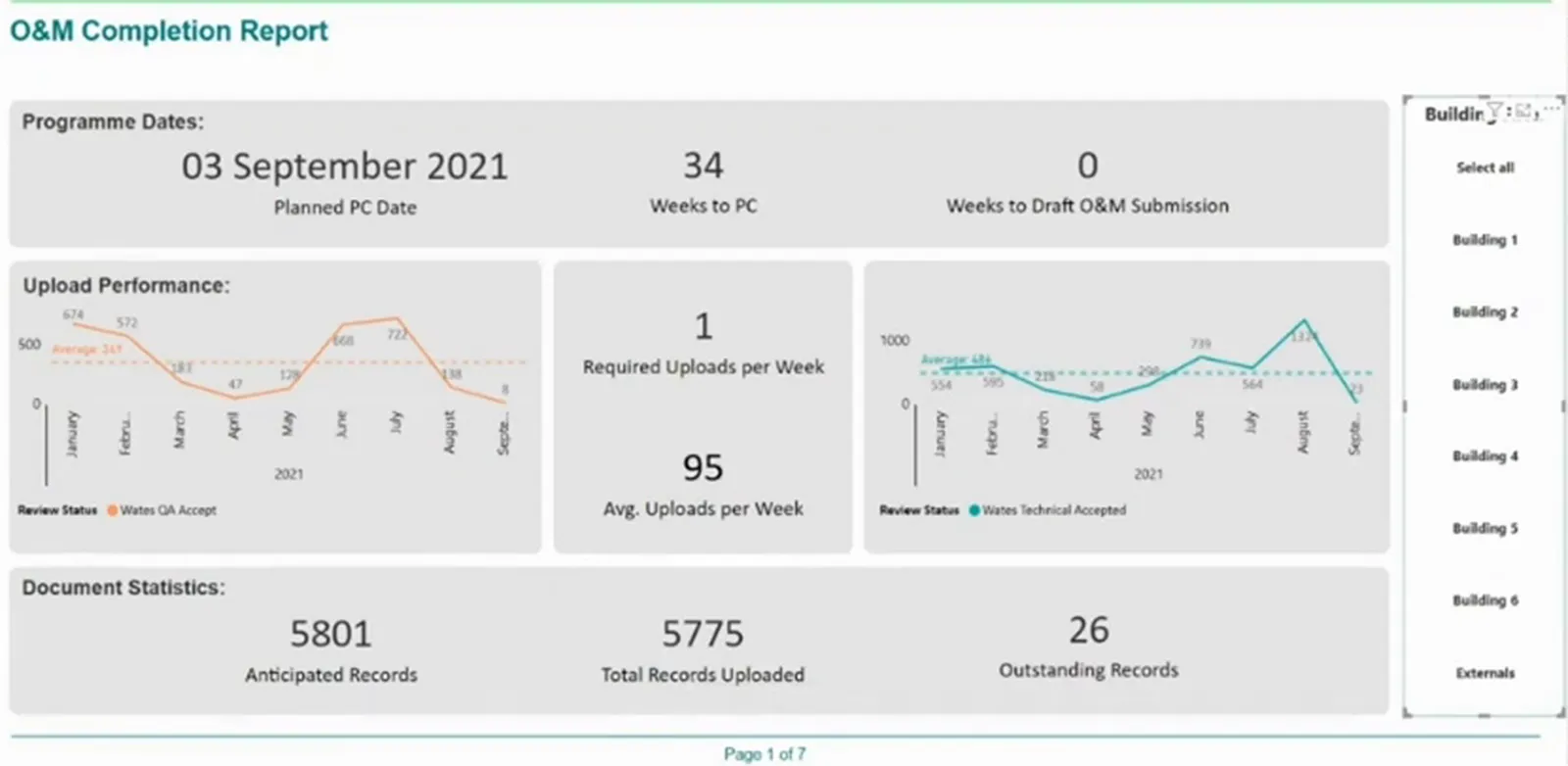
AJ Digital used Morta's API as an input to a Power BI report that brought anticipated, uploaded and outstanding records together with activity and actions. A client could inspect readiness across fabric and MEP information, while a package manager could focus on the sections they were responsible for.
Those views made the current expectation and activity easier to inspect. Because the anticipated counts initially supplied by subcontractors were not always accurate, the team still needed to revisit the estimate as the handover developed.
Before and after
| Criterion | Earlier handling described by Christian | AJ Digital template shown in the showcase |
|---|---|---|
| O&M structure | Each subcontractor could use its own format and level of detail | Packages shared configurable sections, giving the operator a familiar route to information |
| Maintenance planning | Product, task and frequency detail could remain spread across package files | Structured rows fed one combined PPM view, with supporting detail attached |
| Technical checking | An office administrator could populate information without direct knowledge of the installation | QA checked completeness and a package reviewer checked what was actually installed |
| Practical-completion readiness | The full handover expectation could obscure which information was essential and what remained due | A PC-critical subset, owner and completion date made essential and outstanding items visible |
| Reporting | Completeness could emerge only through detailed review | Role-based views showed anticipated, received and activity data while estimates were kept under review |
About AJ Digital
AJ Digital is a digital construction consultancy. Its services include information management and digital O&M manuals alongside surveying, modelling and design coordination.
AJ Digital used Morta to structure O&M information, technical review and practical completion readiness.
What's next
At the time of the November 2023 showcase, the next direction was to reduce re-entry of information already approved in a project's common data environment (CDE). If technical submittals, as-built information and testing or commissioning records could be identified at the right status, they could move into the O&M process without another manual entry.
Suitable COBie or Revit/model data could also prepopulate product lists and expected deliverables when the model had enough detail and was separated usefully by package. The longer-term aim was a complete handover at PC or a concise list of the remaining information, its owner and the date it would be supplied.
Try Morta on a real project
Explore how a configurable O&M and handover process could work on your project.
